Plate 2
The caterpillar, inside
Cut away along one side, like a museum model. Everything in here is busy turning milkweed into caterpillar.
Draft, awaiting expert review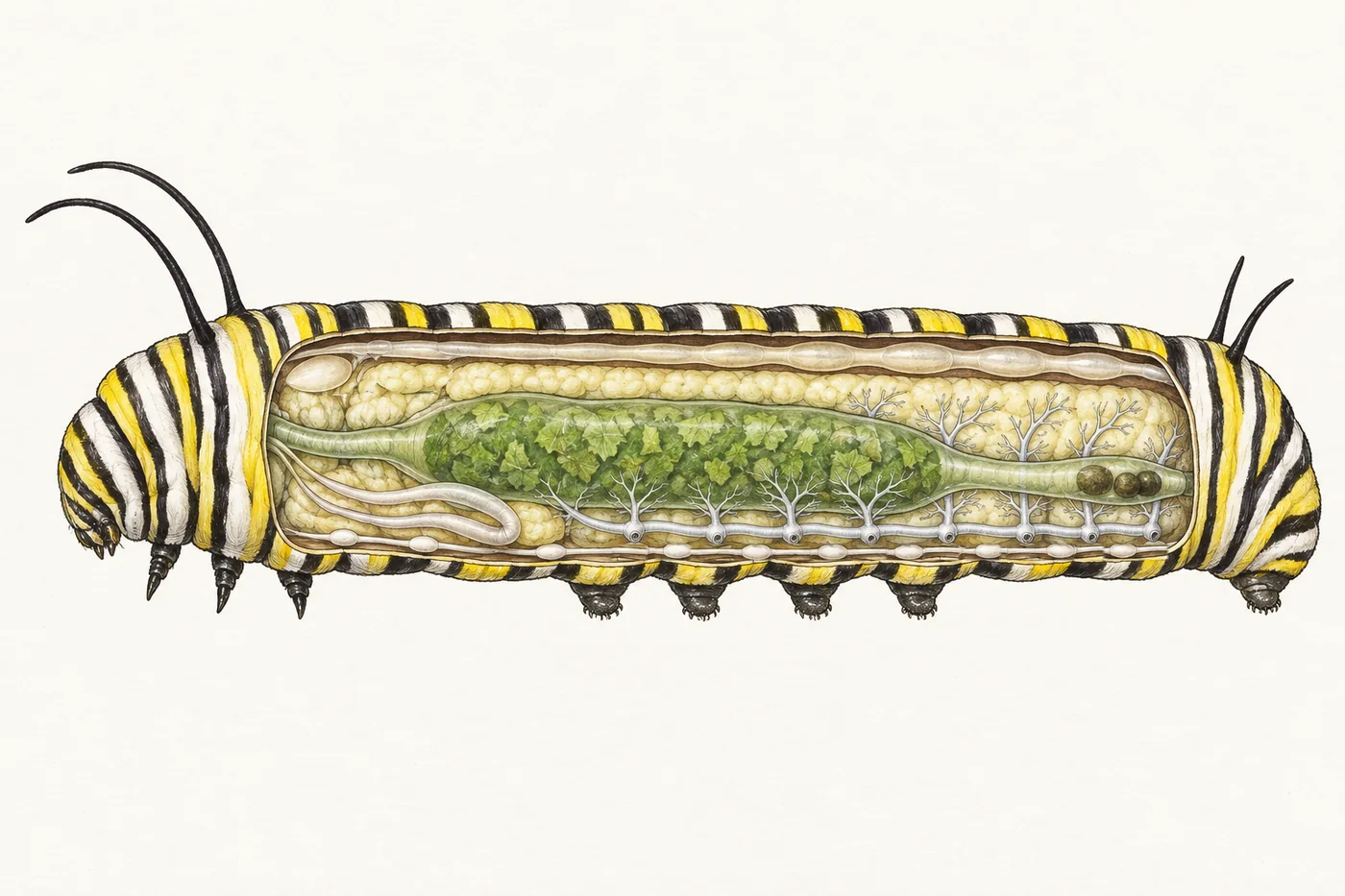
- Food pipeChewed leaf bits slide down a short food pipe from the mouth into the stomach.
- StomachThe stomach is the biggest thing inside. It fills most of the body and digests leaves almost nonstop.
- HindgutThe last part of the tube takes back water and packs the leftovers into little poop pellets called frass.
- Silk gland (one of a pair)A long tube that makes liquid silk. Its twin is on the other side. The silk becomes thread as the caterpillar pulls it out of its spinneret.
- HeartThe heart is a long tube along the back. It squeezes blood forward toward the head, and the blood seeps back.
- Belly nerve cordA nerve cord runs along the belly like a string of beads. Ours runs along our back instead.
- Fat bodyCreamy packing tissue stores food energy. It's the lunchbox for the chrysalis, which can't eat.
- Air tubesSilvery air tubes branch from the breathing holes to every part of the body, bringing air straight in.
- Wing budsTiny flat pockets of cells hide inside the caterpillar. They are the start of butterfly wings.
Also inside, not pictured
- Insect blood isn't kept in veins, and it doesn't carry air. It sloshes around the organs while the air tubes do the breathing.
- Thin "cleaning tubes" pull waste out of the blood and pass it into the gut.
- A small brain sits in the head, above the food pipe.
- Other tiny groups of starter cells wait to build the butterfly's eyes, antennae and legs.
Sources: Oberhauser & Kuda (1997); USDA Forest Service, ch. 3; NC State University, General Entomology; Monarch Joint Venture.
Draft, awaiting expert review. Drawn with AI assistance (ChatGPT) from a written anatomy spec and checked against it. A lepidopterist or horticulturist reviews every plate that identifies a living thing before the guide ships.